Crypto Market Forecast 2026: Convergence, Infrastructure, and Breakout Sectors
Updated On 31 July 2026
Published On 21 January 2026
Following a transformative year marked by institutional adoption and infrastructure development, the trajectory of the industry has become clearer. In 2026, DWF Ventures anticipates increasing overlap between crypto assets and traditional finance, as the industry sheds its meme-focused identity in favor of mature and credible financial systems, scalable infrastructure, and consumer-ready applications.
With this, there are a few categories of applications and infrastructure the DWF Ventures team is looking out for that would thrive and benefit from this convergence.
This comprehensive analysis examines the key sectors and applications positioned to capitalize on this convergence, driven by mature financial systems, scalable infrastructure, and consumer-ready applications that are finally shedding crypto's speculative reputation in favor of utility-driven innovation.
Five Pillars of Convergence
1. Perpetual Decentralized Exchanges (Perp DEXs)
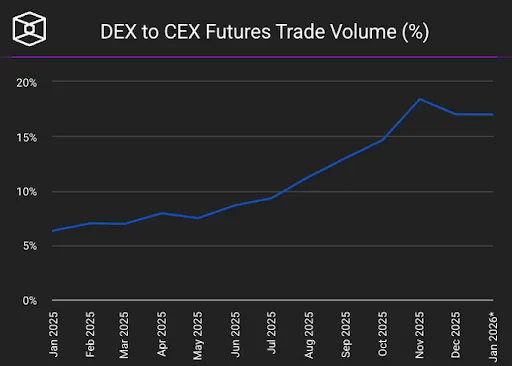
The derivatives trading landscape has witnessed remarkable growth, with decentralized perpetual exchanges capturing increasing market share from their centralized counterparts.
Dark-Pool Perp DEXs: Though perp DEX dominance has already taken a major leap forward, there remains several obstacles in its path, some of which being the risks users are exposed to by having their trades and actions completely publicized. As such, platforms with the capability to provide optional privacy customizations - hide orders, position sizes, etc, while still proving execution on-chain are the next likely step for the sector. By privatizing order matching, these help protect retail traders from malicious actors, and at the same time, minimize alpha leakage for institutions and other sophisticated users, who are able to build up their positions and execute proprietary strategies without being visible to competitors.
DeFi Composability Solutions: While lending protocols have served as a core means for users to generate yield on owned assets or to obtain leverage for amplified returns, they remain limited in the range of collateral-eligible assets, most accepting only majors, LSTs and stablecoins. As support for alternative assets like RWAs and institutional assets gradually become mainstream, the integration of positions (both spot and perps) remains largely untapped. A DeFi-focused composability solution would unlock potential for features like cross-collateralization, yield generation, and greater capital efficiency.
Technical Innovations: Other potential avenues for innovation include execution-based improvements, composable liquidity solutions, orderbook designs (hybrid, fully on-chain etc), integration of social aspects and simplified trading UIs.
2. Stablecoins & Neobanking: Redefining Digital Currency Infrastructure
The stablecoin market has evolved beyond simple price stability mechanisms toward sophisticated yield-bearing instruments that bridge traditional finance and DeFi.
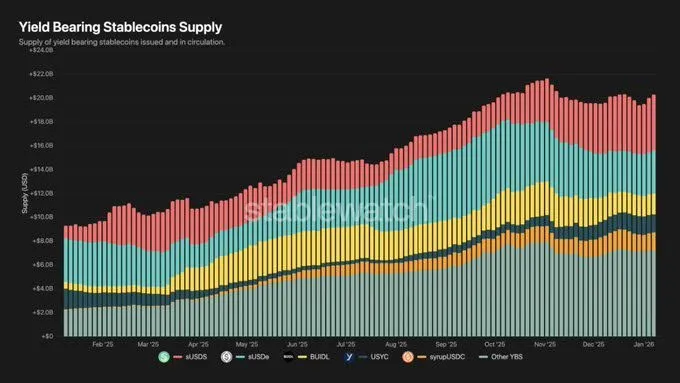
Yield-Bearing Stablecoins: Success of stablecoins like Falcon Finance and Ethena over the past year has demonstrated the value of offering organic yield on top of a price-stable asset, especially in a volatile market environment. As more institutions onboard, interesting solutions that offer yield generated from untapped sources, including niche RWAs, gated financial products, etc are likely to surface and potentially carve out their share of the market.
According to Stablewatch data, the yield-bearing stablecoin sector continues to expand rapidly, with protocols offering competitive Annual Percentage Yields (APY) through various underlying strategies including treasury-backed instruments and delta-neutral positions.
Stablecoin Settlement Infrastructure: Alongside its expansion, the stablecoin market has become increasingly fragmented, exacerbated by the vast number of new entrants. Users experience high amounts of slippage when executing swaps between stablecoins in large amounts, or when attempting to move them across chains. In a future where stablecoins are to be utilized in daily payments and transactions, unification infrastructure and settlement layers will be key pieces in enabling better convertibility and tighter spreads between them.
Regulated Neobanking Solutions: Post-Celsius and BlockFi, non-crypto native users have lacked a regulated and transparent way to access yield from DeFi apps. Neobanks are positioned to become an improved version of these legacy institutions, and are able to offer competitive yield to acquire users early on, before introducing other services like cards, loans, etc.
3. Real World Assets (RWAs)
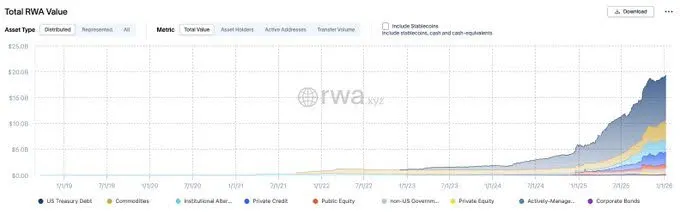
The RWA sector has experienced explosive growth, with total on-chain value tripling throughout 2025. However, significant opportunities remain for enhanced integration and utility.
Composability and Liquidity Solutions: Despite the overall on-chain value of RWAs tripling in 2025, they remain limited in composability and utilization within the wider DeFi ecosystem, largely due to thin and fragmented liquidity across multiple derivatives of the same asset. Similar to stablecoins, a unified layer for tokenized funds, stocks, and even niche assets not just enables better convertibility, but also external applications to directly tap into deeper liquidity, further promoting RWA-related use cases and innovation.
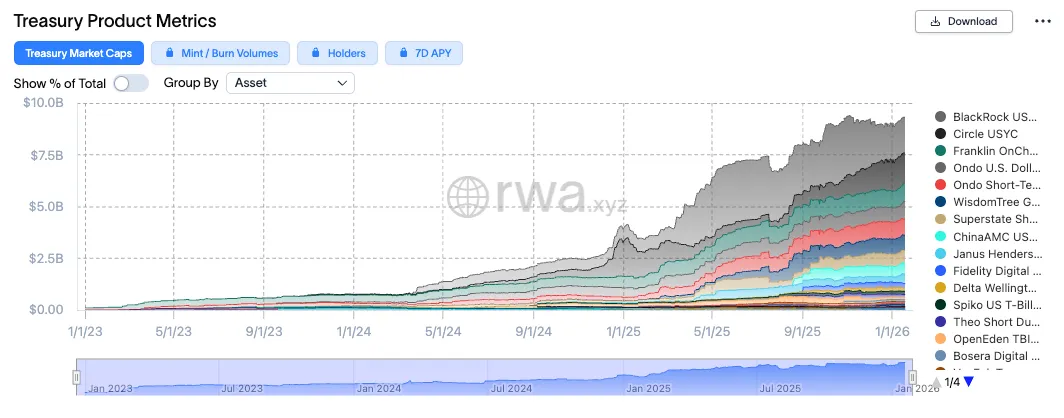
Current market data from RWA.xyz shows significant concentration in government securities, with BlackRock's BUIDL ($1.7B), Circle's USYC ($1.5B), and Franklin OnChain U.S. Government Money Fund BENJI ($886M) leading the sector.
Investment Vehicle Innovation: While not a completely new concept, vaults serve as a direct and effective way to bridge access to a wide range of niche or siloed RWAs and offchain opportunities.
RWA Derivatives: Perpetuals have unlocked a new crypto-native layer of speculation on top of RWAs like equities and commodities, picking up strong interest towards the end of 2025. In 2026, it will be interesting to observe if this trend is sustained, and if organic trading volume persists.
4. Privacy and zkTLS
Privacy infrastructure represents a critical enabler for institutional adoption, addressing concerns around position hunting, alpha decay, and competitive intelligence.
Credit-based/Undercollateralized lending: Onchain credit-based and undercollateralized lending has remained untapped in DeFi. Leveraging zkTLS, lending protocols could potentially merge off-chain credit and on-chain wallet reputation, unlocking the next level of both liquidity and demand for on-chain capital.
Private DeFi: Catalysed by clearer regulation in 2025, institutional adoption has massively increased and is likely to continue doing so in 2026. Despite this, willingness to deploy assets within DeFi has been limited due to fears of malicious actors, position hunting, or even alpha decay. Applications that introduce strong privacy options and customisability will be poised to become major beneficiaries of institutional capital moving on-chain.
5. Artificial Intelligence Integration
AI integration within DeFi represents a natural evolution toward user-friendly, intelligent financial services. Facilitating adoption and viability of agents in the crypto space overall is another opportunity for development in AI in 2026.
AI marketplaces: Marketplaces for agents, niche models and datasets are a use case to have become increasingly viable post-x402 launch. A successful platform could serve as an app store or discovery layer for both agents and human users, who then simply plug individual resources into various workflows or tasks. Ideally this would also include implementations of ERC-8004 for agent identities and reputation scores, and integrations into traditional Web2 applications across online shopping, content recommendations etc.
Yield optimizers: Yields remain one of the largest offerings of DeFi today, with new opportunities constantly emerging. AI agents that allow users to customize yield strategies in a non-custodial manner play a key role in breaking down DeFi’s barriers to entry and providing risk-optimized returns to both retail and institutional users.
Prediction Markets: Achieving Product-Market Fit
Prediction markets have demonstrated exceptional growth and represent one of crypto's strongest product-market fit achievements to date.
Aggregators: Having cemented themselves as one of crypto’s largest market-fits to date, prediction market growth has been exponential. As new platforms emerge, volume, liquidity and markets are inevitably fragmented, leading to inconsistent odds and information. Aggregators will serve as a key layer not just unifying liquidity and markets, but also information and predictions.
Collateralization/Leverage solutions: Capital efficiency remains an unsolved limitation in existing prediction markets. Upcoming players that offer the collateralization of positions, or the ability to obtain leverage or provide yield to idle capital remain of interest.
Other innovations: Other aspects of prediction markets that are attractive include those that utilise unique distribution channels, adopt new liquidity models and introduce innovative markets like parlays.
Future Outlook and Strategic Implications
Several key themes will define success in this environment:
- Infrastructure First: Platforms that prioritize robust, scalable infrastructure over speculative features will capture sustainable market share.
- Institutional-Grade Solutions: Privacy, compliance, and sophisticated risk management capabilities will differentiate successful platforms.
- User Experience Optimization: Complexity abstraction through AI and intuitive interfaces will drive mainstream adoption.
- Regulatory Alignment: Solutions designed with compliance frameworks from inception will have significant competitive advantages.
- Cross-Protocol Interoperability: The ability to seamlessly integrate and support composability across multiple protocols and asset classes will become increasingly valuable.
Conclusion
The cryptocurrency industry's evolution from speculative trading toward utility-driven financial services demonstrates institution-ready use cases. The sectors analyzed — Perp DEXs, yield-bearing stablecoins, RWAs, privacy infrastructure, AI integration, and prediction markets are likely to benefit from this convergence of traditional and decentralized finance.
Success in this environment will require sophisticated understanding of both traditional financial markets and decentralized technology capabilities. Organizations that can navigate this intersection while delivering institutional-grade solutions and user experiences will define the next phase of industry growth.
As we progress through 2026, the distinction between "traditional" and "digital" finance will continue to blur, ultimately creating a more efficient, accessible, and innovative global financial system.
%20(5)-960x540.webp?prefix=media)